
Hot Keywords:
- All
- Product Name
- Product Keyword
- Product Model
- Product Summary
- Product Description
- Multi Field Search
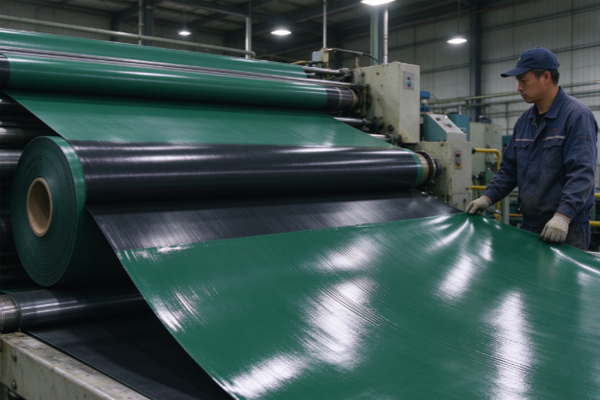
PVC fabric is widely used for outdoor tarpaulins, shade structures, cargo covers, equipment protection, and temporary buildings. Outdoor materials are exposed to sunlight for extended periods and must withstand ultraviolet radiation, continuous heat, temperature changes between day and night, and rain. If a material has insufficient resistance to sunlight, prolonged exposure can cause surface aging, color fading, hardening, and even deterioration of its structural performance. PVC fabric generally combines a textile base with a PVC coating, creating a composite structure with useful outdoor protective properties through material formulation, coating treatment, and base-fabric construction. For tarpaulins that need to remain outdoors for long periods, selecting PVC fabric with suitable sun and weather resistance can help slow material aging and maintain structural stability. This makes PVC fabric suitable for logistics, agriculture, construction, industrial applications, and various outdoor facilities.
When PVC fabric is used outdoors, ultraviolet radiation from sunlight continuously acts on the material surface. Ordinary fabrics may gradually experience fading, surface embrittlement, and reduced strength after prolonged exposure, while a properly formulated PVC coating can provide a certain level of protection against sunlight. The UV resistance of PVC fabric is influenced by factors such as the resin system, stabilizers, pigments, and coating thickness. A suitable material combination can help reduce the negative effects of long-term sunlight exposure on the fabric surface. For outdoor tarpaulins that remain installed for extended periods, good light resistance can help maintain flexibility and structural integrity, allowing the tarpaulin to continue providing reliable covering protection after prolonged exposure to sunlight. Different PVC products have different levels of UV and weather resistance, so material selection should take local sunlight intensity, expected service duration, and installation conditions into consideration rather than relying only on color or surface appearance to judge sun protection performance.
During logistics transportation, cargo may remain outdoors or travel long distances under direct sunlight. Truck tarpaulins can be continuously exposed to sunlight during transportation, and materials with insufficient weather resistance may experience performance deterioration after prolonged use. PVC fabric can form a protective covering over cargo while offering suitable resistance to sunlight, making it suitable for truck tarpaulins, cargo compartment covers, logistics protection, and outdoor cargo storage. Construction materials, packaged goods, machinery, and industrial products that need temporary or long-term outdoor storage can also benefit from PVC tarpaulin protection. When selecting PVC fabric for transportation applications, factors such as opening and closing frequency, transportation distance, fastening methods, and local climate conditions should be considered. This helps create a practical balance between sun resistance, structural strength, weight, and ease of handling.
Agricultural operations often require covering materials to reduce the effects of intense sunlight on equipment, supplies, and working areas. PVC fabric offers good processing flexibility and can be manufactured into agricultural tarpaulins in different sizes and shapes. It can be used for agricultural machinery covers, feed storage, agricultural supply protection, temporary storage areas, and outdoor workspaces. For agricultural facilities exposed to sunlight for long periods, PVC fabric with suitable weather resistance can help reduce the effects of ultraviolet radiation and high temperatures on the material.
Common applications include:
Agricultural machinery covers: Tractors, harvesters, and other agricultural equipment can be covered with PVC tarpaulins when not in operation to reduce direct sunlight and rain exposure.
Agricultural supplies and material covering: Fertilizer packaging, tools, feed, and other agricultural materials can be temporarily covered with tarpaulins to reduce exposure to outdoor environmental conditions.
Temporary agricultural work areas: PVC fabric can be processed into shade structures or temporary covers to provide a more comfortable shaded working environment for outdoor workers.
Agricultural storage areas: PVC tarpaulins can be used as overhead covers for temporary material storage areas, reducing direct sunlight exposure.
PVC fabric can be cut and processed according to the dimensions of agricultural facilities, providing sun protection while also allowing convenient removal, cleaning, and repeated use.
Construction sites and industrial facilities often have equipment, materials, and temporary structures that need to remain outdoors for extended periods. PVC fabric can be processed into equipment covers, material protection tarpaulins, temporary partition curtains, and outdoor shielding structures. These products can help reduce the effects of sunlight, rain, and airborne contaminants on protected objects. For construction machinery, metal equipment, building materials, and large components, prolonged exposure to sunlight can increase surface temperatures and accelerate the aging of certain materials. PVC tarpaulins can create a protective layer that provides a more stable outdoor environment for equipment and materials. In industrial facilities, tarpaulins can also be customized according to equipment dimensions and equipped with eyelets, straps, zippers, roll-up sections, or other fastening structures for quick installation and removal. For equipment that needs to be moved frequently, a moderately lightweight PVC fabric can make handling easier. For permanently installed protective structures, thicker PVC fabric with stronger weather resistance may be more suitable.
In addition to cargo and equipment protection, PVC fabric can also be used for parking shelters, outdoor rest areas, temporary warehouses, logistics stations, and other shade structures. These structures are usually exposed to sunlight for long periods, so the material needs to provide effective shading while maintaining suitable outdoor durability. PVC fabric can be manufactured with different colors, thicknesses, light-transmission properties, and structural configurations to meet the requirements of different shade facilities. For example, PVC tarpaulins can be used to create overhead shade structures in parking areas, reducing direct sunlight exposure on vehicles. Outdoor workspaces can use suitable PVC fabric to create shaded working areas, while logistics facilities can build temporary sun-protection zones according to cargo dimensions. To extend the service life of PVC tarpaulins, proper tension should be maintained during installation, while long-term water accumulation should be avoided. Direct contact with sharp objects should also be minimized. Regularly removing dust and stains can help maintain the surface condition of the material. By selecting PVC fabric according to sunlight intensity, expected service duration, structural dimensions, and local climate conditions, sun-protection tarpaulins can provide more stable performance across a wide range of outdoor applications.
