
Hot Keywords:
- All
- Product Name
- Product Keyword
- Product Model
- Product Summary
- Product Description
- Multi Field Search

When using a tarp outdoors, the biggest concern is often not the pattern but whether it can handle rain, sunlight, wind, and repeated use. Camouflage tarps are popular for camping, woodland work, vehicle covering, outdoor storage, and temporary protection because they provide good coverage while blending naturally into outdoor surroundings. But different environments require different tarp features, so material, waterproofing, durability, and fastening strength are all worth considering.
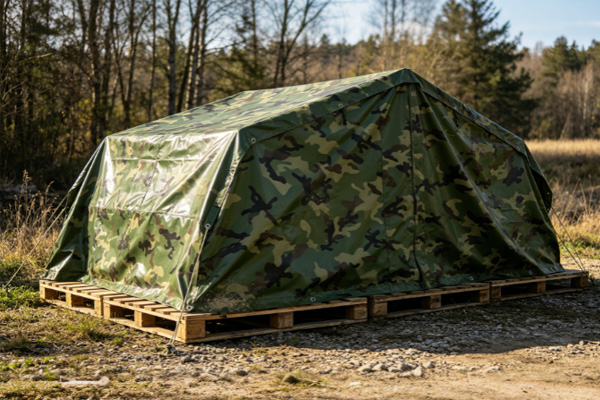
Camping areas, hiking sites, and outdoor work zones are common places to use camouflage tarps. They can be set up as temporary rain shelters or used to cover equipment and supplies. For people who spend a lot of time outdoors, a durable tarp can be much more practical than lightweight fabric.
Rain protection: Place the tarp above a tent or around the campsite to reduce direct exposure to rain.
Equipment covering: Cover backpacks, folding tables, chairs, and outdoor gear when they are not in use.
Temporary shade: On sunny days, a camouflage tarp can create a shaded area for resting or outdoor activities.
For camping in rainy conditions, PVC camouflage tarps are suitable for frequent use and stronger waterproof protection. Canvas camouflage tarps can be a good choice when breathability and a more natural outdoor appearance are important.
Vehicles parked outdoors are exposed to sunlight, dust, and rain. Construction vehicles, trailers, motorcycles, and outdoor equipment can all benefit from temporary or long-term covering. Camouflage tarps offer broad coverage and strong visual concealment, making them practical for these applications.
Construction vehicles: Cover exposed sections to reduce direct contact with rain, dust, and dirt.
Trailers and cargo: Protect goods during transportation or outdoor storage.
Machinery: Cover equipment during periods of downtime to reduce exposure to dust and rain.
Outdoor tools: Protect lawn equipment, generators, gardening tools, and similar items.
These applications require good tear resistance and reliable fastening. In windy locations, reinforced edges, strong grommets, and secure ropes are important. Even a strong tarp can fail if the fastening points are poorly designed.
Farms, woodland areas, and construction sites can expose tarps to dirt, branches, rain, and strong sunlight. Ordinary covering materials may wear out quickly in these conditions. Camouflage tarps also have a low-profile appearance that works well in natural outdoor surroundings.
On farms, they can be used to cover agricultural machinery, tools, feed, and outdoor supplies. In woodland work areas, they can protect equipment or create temporary covered spaces. At outdoor construction sites, tarps can cover selected materials and equipment. PVC is a practical choice when waterproofing and weather resistance are priorities, while Canvas can work well for applications where breathability and frequent handling are more important.
Not every camouflage tarp is designed for long-term exposure to harsh weather. Coastal areas may have salt spray, mountain locations can experience strong winds and heavy rain, while hot climates may expose tarps to intense UV radiation. These conditions can accelerate material aging.
Coastal environments: Pay attention to waterproofing, environmental durability, and the quality of grommets and other hardware.
Mountain areas: Wind resistance, tear strength, and secure fastening become more important.
Hot and sunny locations: Choose outdoor tarps with good UV resistance to reduce cracking and material deterioration.
Rainy regions: Waterproof performance is essential, while seams and reinforced edges also deserve attention.
For short-term covering, there are more material options. If the tarp will remain outdoors for several months or longer, material, thickness, reinforcement, and weather resistance should all be considered rather than choosing based only on the camouflage pattern.
The right camouflage tarp depends largely on where and how long it will be used. Camping, vehicle covering, farm storage, woodland work, and equipment protection all have different requirements. PVC and Canvas are both common outdoor tarp materials, and the right choice can be made by considering waterproofing, UV exposure, weight, flexibility, and fastening needs. NEWSTAR PLASTIC INDUSTRY CO.,LTD. supplies PVC and Canvas tarps for different outdoor covering and protection applications.
