
Hot Keywords:
- All
- Product Name
- Product Keyword
- Product Model
- Product Summary
- Product Description
- Multi Field Search
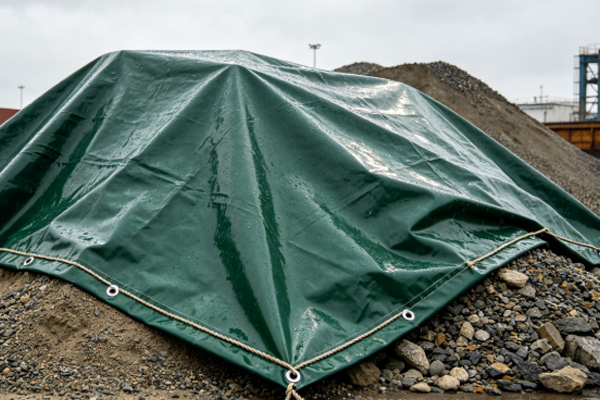
PVC tarpaulins are widely used as industrial protection and covering materials in cargo transportation, warehouse protection, construction, agricultural facilities, outdoor spaces, and equipment protection. With increasing customer demands for service life, product functionality, and customization, PVC tarpaulin design involves more than selecting material thickness and cutting dimensions. It also requires careful consideration of tensile strength, abrasion resistance, temperature adaptability, seam reliability, and maintenance convenience. Proper performance planning helps tarpaulins maintain stable protective capabilities in different working conditions while reducing replacement and repair costs caused by unsuitable material selection. For PVC tarpaulin suppliers, understanding the key performance requirements in product design can help them provide customers with more suitable specifications and application solutions.
Waterproof performance is a fundamental consideration in PVC tarpaulin design, particularly for applications such as logistics transportation, outdoor storage, machinery protection, and outdoor facilities that are frequently exposed to rain. PVC coatings can form a protective layer on the base fabric, reducing the possibility of water penetrating the material. However, actual waterproof performance depends not only on the coating itself but also on tarpaulin thickness, surface treatment, manufacturing processes, and seam design. Even when the main tarpaulin material has good waterproofing capabilities, improper treatment of edges, needle holes, or connection points may still lead to water leakage.
During the design of PVC tarpaulins, suitable waterproofing specifications should be selected according to the operating environment. For tarpaulins intended for long-term outdoor use, materials with good coating integrity and weather resistance can be selected. For products that are frequently folded and unfolded, it is important to consider whether the coating is prone to cracking after repeated bending. Large tarpaulins should also incorporate drainage planning into the supporting structure to prevent water from accumulating on the surface for extended periods.
Seams can be manufactured using heat welding or other reliable connection processes suitable for PVC materials, helping reduce the risk of water entering through joined sections. By coordinating material selection, manufacturing processes, and structural design, manufacturers can improve the overall waterproof reliability of PVC tarpaulins.
During transportation covering, outdoor construction, and large-scale warehousing, PVC tarpaulins may continuously experience wind, pulling forces, cargo friction, and localized stress caused by fastening devices. If the material has insufficient tensile strength, it may deform or experience edge tearing and fastening-point damage during use. Therefore, the design should select suitable base fabric strength and coating specifications according to the tarpaulin dimensions, coverage span, and actual load conditions.
The base fabric generally provides the primary structural strength of the tarpaulin. Fabric density, fiber type, and weaving method can all affect its load-bearing performance. For large tarpaulins or products that need to be tensioned frequently, reinforcement straps, strengthened edges, and optimized fastening-point layouts can help improve load distribution. Areas around eyelets are particularly susceptible to concentrated pulling forces, so additional reinforcement layers can be added to reduce the risk of localized damage.
Tear resistance is not exactly the same as tensile strength. When a tarpaulin is scratched by a sharp object, caught on an edge, or damaged locally, the tear may continue spreading along the fabric direction. Selecting an appropriate base fabric structure, reinforcing the edges, and optimizing manufacturing methods can help reduce the likelihood of rapid tear expansion. For tarpaulins that frequently come into contact with cargo edges, steel materials, or machinery, the design should also be adapted to actual friction conditions.
When used outdoors, PVC tarpaulins are commonly exposed to sunlight, rain, temperature changes, and airborne pollutants over extended periods. Weather resistance affects whether the tarpaulin can maintain its original physical properties and protective performance throughout its service life. Parking shelters, warehouse covers, vehicle tarpaulins, and agricultural facilities may remain outdoors for long periods, making UV resistance, heat resistance, and low-temperature flexibility important design considerations.
Under prolonged sunlight exposure, certain materials may experience fading, hardening, or performance degradation. Appropriate PVC formulations, stabilizers, and surface treatments can help improve weather resistance, although the actual results depend on product specifications and environmental conditions. Tarpaulins used in hot regions should be designed with consideration for the effects of temperature on coatings, seams, and material flexibility. In cold environments, designers should pay attention to whether the material becomes brittle or develops cracks when bent at low temperatures.
Weather-resistant design should also be adapted to local climate conditions. For long-term outdoor projects, suitable material grades can be selected according to the expected service period and sunlight intensity. For seasonal tarpaulins, material selection can be adjusted to balance weather resistance with purchasing costs. Clearly defining the operating environment helps customers choose PVC tarpaulin products that better match their actual requirements.
During installation, folding, transportation, and daily use, PVC tarpaulins frequently come into contact with vehicle frames, floors, cargo, support poles, and other hard objects. Good abrasion resistance can reduce surface wear, coating damage, and localized breakage, improving reliability during repeated use. For logistics transportation tarpaulins and industrial equipment covers, abrasion resistance is particularly important because these applications often involve frequent handling and contact friction.
Material thickness and coating structure affect abrasion resistance, but thicker material is not necessarily the most suitable choice for every operating condition. Excessively thick tarpaulins may increase overall weight, making manual unfolding, rolling, and transportation more difficult. Therefore, the design should consider usage frequency and operating methods to select a material specification that meets protection requirements.
Flexibility also influences the practical user experience. Tarpaulins that need to be folded frequently may become difficult to store if the material is too rigid, while repeated bending can increase the risk of localized damage. Large fixed tarpaulins, on the other hand, need to balance material support and tensioning requirements. A suitable design should achieve an appropriate balance between abrasion resistance, thickness, flexibility, and weight, allowing the tarpaulin to withstand practical friction without creating unnecessary handling difficulties.
Some PVC tarpaulin applications, such as industrial facilities, temporary structures, exhibition spaces, and specialized work areas, may involve specific flame-retardancy requirements. Flame-retardant PVC tarpaulins can be selected according to relevant product standards and application conditions. However, flame-retardant performance does not mean that the material is completely non-combustible, nor can it replace necessary fire safety measures at the site. During the design process, the appropriate product specifications should be confirmed based on the operating environment, applicable regulations, and project requirements. Suppliers should also provide relevant test data and certification information when required.
Processing performance is another important consideration in PVC tarpaulin design. Tarpaulins commonly undergo cutting, hemming, heat welding, punching, and connection assembly. Different material formulations, thicknesses, and fabric structures may affect processing results. Good heat-welding compatibility helps create stable seams, while suitable cutting performance facilitates the production of customized products in different sizes and shapes. For large tarpaulins, seam locations and manufacturing procedures should be planned in advance to avoid excessive joints that could affect installation efficiency.
During the purchasing process, customers can also consider whether the product is easy to clean, repair, and maintain. For tarpaulins intended for long-term use, surface cleaning, seam inspection, and fastening component maintenance may all influence service life. Considering these requirements during the design stage allows PVC tarpaulins to provide effective protection while supporting long-term management and repeated use.
PVC tarpaulin design requires performance specifications to be determined according to the intended application. Waterproofing provides basic protective capabilities, while tensile strength and tear resistance contribute to structural stability. Weather resistance affects outdoor performance, and abrasion resistance and flexibility influence daily handling. Flame-retardancy requirements and processing performance also affect suitability for specialized applications.
For PVC tarpaulin suppliers, understanding customers' operating environments, covered objects, installation methods, and expected service periods can help them select more suitable materials and manufacturing solutions. Through appropriate performance planning, PVC tarpaulins can better meet the requirements of logistics transportation, warehouse covering, industrial protection, and outdoor facilities.
