
Hot Keywords:
- All
- Product Name
- Product Keyword
- Product Model
- Product Summary
- Product Description
- Multi Field Search

Printing on PVC tarpaulins may seem like simply placing a logo, text, or graphic on the material surface, but the process involves multiple factors, including fabric structure, PVC coating, ink adhesion, color reproduction, and subsequent fabrication. When purchasing customized tarpaulins, focusing only on the visual effect can easily lead to overlooking material compatibility and service durability. Clarifying printing requirements in advance can help reduce production rework and problems during actual use.
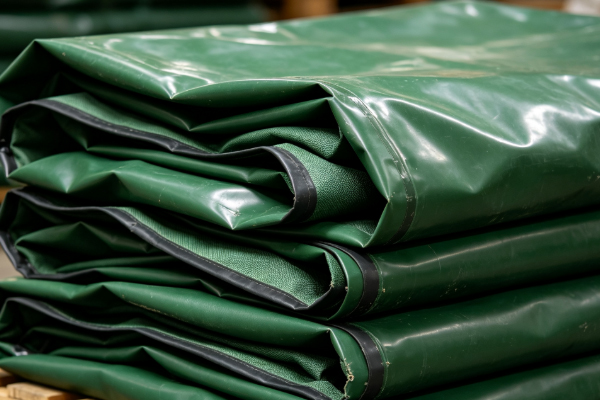
Before printing begins, it is important to understand the characteristics of the tarpaulin itself, as different surface conditions can directly affect ink performance.
The material surface is more than just a flat printing base. The coating condition can affect graphic adhesion, so several factors should be confirmed before production.
Check whether the surface is smooth and free from obvious uneven areas that could affect graphic integrity.
Determine whether the material uses a coated or laminated structure so that a suitable printing process can be selected.
Confirm whether the surface has received special treatments, such as UV resistance, anti-static treatment, or other functional treatments.
Conduct a small-area print test on materials with special surfaces to evaluate ink adhesion.
Once the surface characteristics are clearly established, the printing method can be selected more accurately, reducing compatibility problems between the material and ink.
The weight and fabric structure of a PVC tarpaulin affect its flexibility, stiffness, and fabrication method, so the printing solution should be evaluated according to the final application. Lightweight tarpaulins are easier to bend, which means the printed layer needs to withstand repeated rolling. Heavier products have a more substantial structure, requiring graphics to maintain even coverage. Different polyester fabric densities can also create variations in surface appearance. Large tarpaulins require additional consideration of how folding, rolling, and transportation may affect the printed surface. Combining material specifications with actual usage conditions allows the printing design to better match the finished product.
Different graphic designs, order volumes, and usage requirements call for different printing processes, so a single standard should not be applied to every project.
Screen printing is suitable for customized designs with limited colors and clear graphic structures, particularly for logos and other markings that need to be reproduced repeatedly.
Single-color or limited-color logos are easier to manage in terms of color registration.
Large quantities of identical graphics are suitable for batch production.
Clear graphic edges make the process suitable for text, logos, and standard markings.
Repeat orders can maintain relatively consistent layout results.
For projects involving simple graphics and relatively large quantities, screen printing generally offers good production compatibility.
Photos, gradients, and multi-color graphics require more detailed visual reproduction, making digital printing more flexible for these customized applications.
Multi-color graphics can reduce the limitations associated with traditional plate making.
Designs containing gradients and fine details can be processed digitally more easily.
Small-batch customization does not require complex printing plates.
Graphic content can be changed quickly between different orders.
When customers place greater emphasis on image details and personalized designs, digital printing can provide broader application flexibility.
UV inks cure relatively quickly and can reproduce graphic details effectively, but PVC tarpaulins are flexible materials, so ink compatibility with the surface still needs to be verified before actual production.
Test how well the ink adheres to the PVC coating.
Check whether graphics crack or peel after bending.
Observe the integrity of the printed area after scratching.
Conduct weathering tests according to the actual application environment.
UV printing should not be evaluated only by its initial visual appearance. Flexibility and long-term performance also deserve attention.
Once the printing process has been selected, production details can determine whether the final graphics meet the original design requirements.
Color deviations and loss of detail are easily noticeable printing issues, so a clear color control standard should be established during production.
Confirm the customer-approved color sample or color value in advance.
Check differences in the base color between different material batches.
Pay attention to the clarity of small text, lines, and graphic edges.
Large solid-color areas should be checked for even coverage.
With a clear basis for color management, it becomes easier to determine during final inspection whether the printed result meets the required standard.
Tarpaulins are often folded, rubbed, or stretched during transportation, installation, and use, so the printed layer needs to provide durability suited to the actual application. A simple abrasion test can be used to check for surface color loss, while folded areas should be examined for visible cracking. Outdoor products also require attention to color changes after prolonged sunlight exposure, while frequently moved tarpaulins should be inspected carefully around edges and contact areas. A printed layer must withstand practical friction and bending to support long-term use.
After printing, tarpaulins commonly undergo cutting, heat welding, punching, or accessory installation, so graphic placement should be planned together with the fabrication process.
Keep important graphics away from cutting lines to prevent them from being cut off.
Avoid placing key logos or small text in heat-welding areas whenever possible.
Leave sufficient space around punching positions.
Position large graphics according to the unfolded dimensions of the finished product.
Coordinating the artwork layout with subsequent fabrication can help preserve a complete visual appearance after the tarpaulin is finished.
Final inspection should go beyond checking whether the graphics are visually striking. The material condition and intended method of use should also be taken into account.
Visual inspection should proceed from the overall appearance to individual details, with particular attention to obvious differences between the approved design and the finished product.
Check for noticeable color deviations.
Examine text, logos, and graphics for missing areas.
Confirm that graphic edges are free from blurring, ghosting, or misalignment.
Check large printed areas for consistent coverage.
After the appearance meets the predetermined standard, the product can proceed to checks for printing durability and fabrication quality.
The printed area should undergo basic physical testing rather than relying solely on visual inspection to determine ink adhesion.
Perform an appropriate abrasion test and observe any surface changes.
Check for cracks in the ink layer after bending.
Add weather-resistance testing for products intended for long-term outdoor use.
For tarpaulins designed for special applications, establish test conditions based on the actual working environment.
These tests can help purchasers identify potential quality issues such as color loss and peeling before the product is put into service.
After heat welding, cutting, punching, and other processes are completed, the printed areas should be checked again because fabrication may affect graphic integrity.
Check for graphic deformation near heat-welded edges.
Verify that the positions of logos and text remain appropriate after cutting.
Make sure punching and fastening components do not cover important content.
Unfold the entire tarpaulin and evaluate its overall appearance from a normal viewing distance.
The finished product represents the actual form delivered to the customer, so final inspection should focus on its completed appearance.
For PVC tarpaulin printing, purchasing considerations go beyond whether graphics can be successfully printed. Material surface compatibility, printing method, ink durability, and post-fabrication integrity all deserve attention. Selecting the appropriate weight, surface treatment, and graphic requirements for each application, combined with sample testing and production control, can help customized tarpaulins maintain more consistent performance in both appearance and practical use. Newstar Plastic Industry Co.,Ltd. can provide customized PVC tarpaulin solutions based on customers’ applications, material specifications, and printing requirements, helping purchasers select suitable materials and printing processes.
