
Hot Keywords:
- All
- Product Name
- Product Keyword
- Product Model
- Product Summary
- Product Description
- Multi Field Search

Many people wonder how thick, waterproof tarpaulins can also display text, graphics, and advertising images on their surfaces. In fact, PVC tarpaulins usually consist of a composite structure made from polyester base fabric and PVC coating. After coating and surface treatment, the material can form a surface suitable for graphic printing. When the material specifications, surface condition, ink, and printing process are properly matched, tarpaulins can provide both protective covering performance and visual display functions.
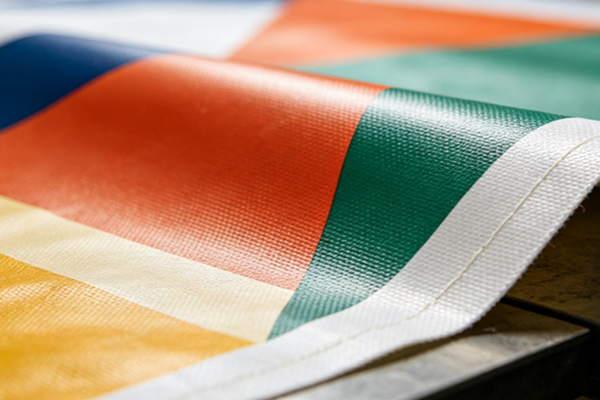
The ability of a tarpaulin to carry printed graphics is closely related to its composite material structure. The base fabric provides structural strength, while the PVC layer forms a continuous outer surface.
After processing, the PVC coating can form a relatively continuous surface that provides a foundation for ink adhesion and graphic reproduction.
The PVC layer can reduce the impact of exposed base-fabric texture on image details;
Different surface finishes can be selected according to product applications, such as glossy or matte surfaces;
Some products can improve their functional performance and appearance through surface treatment;
Printable tarpaulins can display text, logos, graphics, and other content according to design requirements.
A properly designed PVC surface structure allows tarpaulins to develop from simple covering materials into products that also provide visual display functions.
PVC tarpaulins commonly use high-strength polyester fabric as the base material, providing the mechanical properties required for tensile and tear resistance. The yarn specifications, fabric structure, and thickness of the base fabric can affect the strength and processing performance of the finished material. For this reason, printed tarpaulins should not be evaluated only by their surface graphics; the base-fabric structure also needs to be selected according to the actual application conditions.
Printing performance is not determined only by the equipment and ink. The surface condition of the tarpaulin also affects graphic clarity, color presentation, and stability during use.
The more suitable the tarpaulin surface is for graphic printing, the easier it is for the printed image to remain complete, especially when the design contains small text or complex graphics.
A relatively smooth surface helps the ink cover the material evenly;
Graphic edges can remain clearer, reducing localized blurring;
Large areas of solid color can achieve a relatively continuous visual appearance;
Fine lines, text, and logos require suitable printing parameters based on the material surface condition.
A suitable surface condition allows the design file to be reproduced more consistently as a finished graphic.
Some PVC tarpaulins use acrylic, PVDF, or other surface treatments. Different treatments can change the surface characteristics and weather resistance of the material. During printing, the ink and process parameters need to be matched to the specific surface condition rather than applying the same settings used for ordinary PVC materials.
When a tarpaulin serves covering, protection, and information-display functions at the same time, printing can add brand identification, product information, or on-site instructions to an otherwise functional material.
Truck tarpaulins are exposed to outdoor transportation conditions for extended periods. In addition to basic requirements such as waterproofing and tear resistance, they may also be used to display corporate identification and promotional graphics.
Truck side curtains can display company names or brand logos;
Logistics vehicles can display contact information and service details;
Large tarpaulin surfaces are suitable for highly visible promotional graphics;
Printed content can be designed according to the dimensions of the vehicle.
Adding graphics to transportation covering materials allows them to provide mobile display functions while protecting cargo.
Event tents, exhibition facilities, and temporary venues often need to highlight an event theme or corporate image. Printable tarpaulins can present different graphics and colors according to the design. For reusable event facilities, customization can also take into account the material’s weather resistance and surface treatment requirements.
Construction-site covers, equipment covers, and temporary storage facilities can incorporate identification numbers, logos, or warning information according to actual requirements. The key considerations include:
Add Identification as Required: Numbers, logos, or warning information can be incorporated according to application needs.
Consider Material Performance: The printing solution needs to be coordinated with the material’s strength.
Meet Protection Requirements: Waterproofing, weather resistance, and other requirements need to be considered.
Coordinate with Subsequent Processing: The design should be compatible with cutting, welding, and other processing requirements.
Consider Finished Product Conditions: The focus should not be limited to graphic appearance; actual operating conditions also need to be considered.
The printing solution should take identification requirements, material performance, protection requirements, and processing methods into account as a whole.
When purchasing printable tarpaulins, many factors can affect the final result. Material specifications, application conditions, and subsequent processing requirements should be confirmed together.
Different applications have different requirements for tarpaulin strength, weight, weather resistance, and functional treatments, so the final application should be clearly defined before selecting the material.
Truck tarpaulins should focus on tear resistance, abrasion resistance, and outdoor weather resistance;
Outdoor tents should consider waterproofing, weather resistance, and flame-retardant requirements;
Engineering covering materials should be selected according to the covered object and operating environment;
Products used outdoors for extended periods can include UV-resistant treatment according to requirements.
Once the material specifications are matched to the actual operating conditions, the printed graphics can be built on a stable material foundation.
Before purchasing, information such as graphic dimensions, colors, text detail, and printing area should be provided. The appropriate printing method should then be confirmed according to the tarpaulin surface condition. For large advertising graphics, company logos, or designs containing many fine details, sample testing should also be conducted in advance to evaluate color, clarity, and ink adhesion.
After printing, tarpaulins may undergo cutting, joining, heat sealing, punching, and installation of eyelets or other hardware. The position of the graphics should therefore be coordinated with the final product structure in advance. For products requiring welding or edge folding, sufficient processing areas should be reserved to prevent important text and logos from being positioned within subsequent processing areas.
The printability of a tarpaulin is not simply a matter of whether ink can adhere to its surface. It results from the combined interaction of material structure, surface condition, printing technology, and finished-product processing. Newstar Plastic Industry Co.,Ltd. can provide PVC tarpaulin customization and printing material matching solutions according to different application requirements, helping customers select products that meet their dimensional, performance, and graphic display requirements.
