
Hot Keywords:
- All
- Product Name
- Product Keyword
- Product Model
- Product Summary
- Product Description
- Multi Field Search

After the same design file is printed, the actual colors on PVC tarpaulin may differ from the screen preview, and variations in shade may also occur between different production batches. These differences are related to the color of the PVC tarpaulin itself, its surface finish, printing process, and production conditions. For advertising graphics, brand promotion, outdoor displays, and similar projects, understanding the factors that affect color reproduction can help reduce differences between the finished product and the expected result.
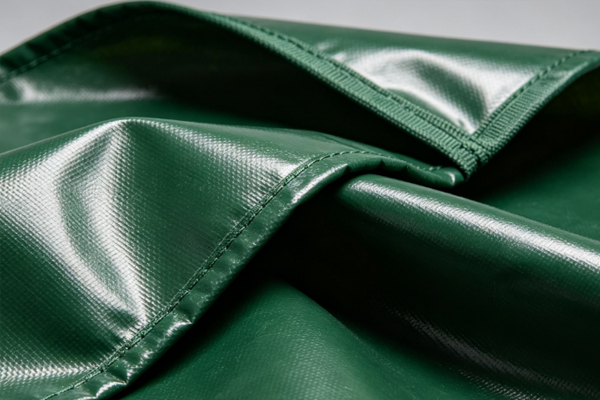
The design file is only one part of color control, while the printing substrate also contributes to the final visual appearance. The same CMYK data may produce different results when applied to different tarpaulin materials.
The ink layer is printed over the PVC surface, so the color of the substrate can influence the visual result.
White tarpaulin is generally more suitable for producing colorful graphics.
Gray, blue, or other dark substrates may make certain colors appear darker.
For orders with high color reproduction requirements, the material color and opacity should be confirmed in advance.
Using consistent production materials can reduce basic differences between different batches.
Surface gloss changes the way light is reflected. The same color may appear different in brightness, vividness, and visual texture on glossy and matte PVC. Glossy surfaces generally produce stronger reflections, while matte surfaces create a softer appearance. If different surface finishes are used for proofing and mass production, the visual appearance of the finished product may change.
PVC formulation, coating condition, and surface treatment can affect ink spreading, adhesion, and light reflection.
The PVC formulation can affect ink spreading and adhesion.
The coating condition can influence print uniformity and stability.
Surface treatment can affect ink adhesion and light reflection.
After changing the material, the original printing conditions may not be directly applicable.
The actual tarpaulin specifications should be confirmed before formal production.
Confirming material specifications and adjusting printing conditions in advance can help reduce uncertainties during production.
Once the material has been determined, the process conditions on the printing side can also affect the final result. Changes in ink type, ink volume, print mode, or equipment condition may cause color variations.
PVC tarpaulin can be printed using solvent, eco-solvent, UV, and other printing methods depending on the material and equipment. Different systems have different color characteristics and film-forming methods.
Changing the ink type may affect color saturation.
Different ink layer thicknesses can change the visual appearance of certain color areas.
The compatibility between the ink and PVC surface can also affect the finished result.
After changing the ink, it is recommended to conduct a new sample test.
Settings such as printing speed, resolution, ink volume, and print mode can all affect the actual output.
Printing speed can affect output quality and efficiency.
Resolution affects the reproduction of image details.
Ink volume affects color density and uniformity.
Print mode affects overall output stability.
Large solid-color areas, gradients, and highly saturated graphics are more sensitive to parameter changes.
During mass production, key settings should remain as consistent as possible to reduce noticeable shade variations within the same order.
Maintaining stable key parameters helps ensure consistency in batch production.
Printhead condition, ink supply systems, equipment calibration, and ICC color management all contribute to color control.
Printhead condition affects ink output stability and color reproduction.
The ink supply system affects ink delivery and color consistency.
Equipment calibration affects output accuracy and batch stability.
ICC color management affects color conversion and reproduction.
When equipment conditions change, simply modifying CMYK values in the design file cannot guarantee consistency between different batches.
Establishing a fixed combination of equipment, ink, and color management is more suitable for stable long-term production.
Stable equipment and color management help reduce color differences between batches.
Color control should be completed before formal production rather than waiting until mass production is finished to evaluate the result. Proofing, material confirmation, and maintaining color standards are all important steps.
Computers and mobile devices display colors through RGB light emission, while PVC tarpaulin is viewed through reflected ambient light. The two display principles are different.
Screen brightness can affect visual judgment.
Different display devices have different color settings.
Some screens can display colors beyond the range that can actually be reproduced by printing inks.
For important projects, physical samples are more suitable as a reference than relying solely on screen previews.
The proofing material should be as consistent as possible with the final production order, including the tarpaulin model, color, GSM, and surface finish. The printing equipment, ink, and print mode should also correspond as closely as possible to the mass-production conditions. Using the same material for proofing can help identify issues with color, image clarity, and surface appearance in advance, reducing the need for major adjustments during mass production.
For long-term repeat orders, approved physical samples can be retained.
Keep physical samples for comparison during future repeat orders.
For projects with strict brand-color requirements, measurement data can also be recorded using appropriate instruments.
Store samples together with material specifications and production parameters.
This makes it easier to identify the corresponding production conditions for future repeat orders.
Proper sample and data retention helps maintain color consistency across long-term orders.
Color inspection requires consistent viewing conditions while also considering the uniformity of the entire graphic and the actual application environment. This avoids making a judgment based on only one area of the printed material.
Different light sources, viewing angles, and backgrounds can change how people perceive color. During inspection, the sample and finished product should be viewed under similar lighting conditions, with the viewing distance and angle kept as consistent as possible. For high-precision branding projects, standardized instrument measurements can also be used as an additional reference.
Large PVC tarpaulin graphics cover considerable areas, so inspection should not focus only on individual color patches. The entire graphic should also be examined. Key areas to check include:
Color changes at different positions on the same roll of material.
Tone differences between different joined or seamed areas.
Uniformity of large solid-color areas.
Whether gradients, fine lines, and graphic details appear normal.
These checks can help identify localized production issues.
PVC tarpaulin used for advertising, vehicle covers, event barriers, and similar applications may be exposed to sunlight, folding, rolling, and friction. During inspection, in addition to checking the initial color, the actual application environment should also be considered when evaluating weather resistance, rub resistance, and graphic adhesion. For long-term outdoor projects, conducting relevant performance tests in advance makes it easier to determine whether the printed result can meet the expected service period.
When color variations occur in PVC tarpaulin printing, the focus should be placed on material confirmation, sample verification, and standard setting before production rather than simply modifying the design file. Clearly defining the tarpaulin specifications, surface finish, printing method, and inspection requirements allows suppliers to execute orders more accurately. Newstar Plastic Industry Co.,Ltd. can provide customized PVC tarpaulin solutions for advertising displays, outdoor promotion, industrial covering, and other applications, while matching product specifications with customers’ printing and processing requirements.
