
Hot Keywords:
- All
- Product Name
- Product Keyword
- Product Model
- Product Summary
- Product Description
- Multi Field Search
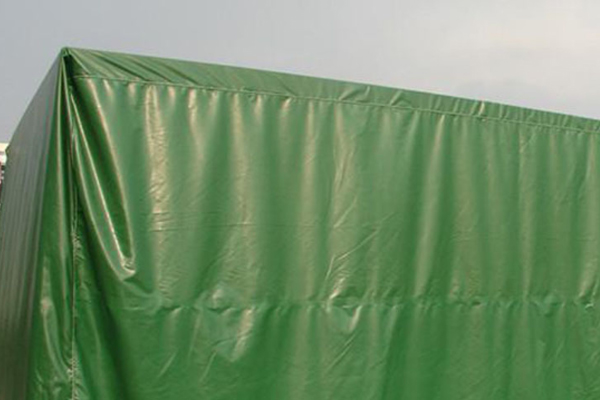
High-performance protective tarpaulins are often exposed to rain, sunlight, wind, friction, stretching, and frequent loading and unloading during daily use. PVC fabric is widely used for this type of protective covering because it generally combines a high-strength textile base with a PVC coating. This composite structure provides good tensile strength while improving resistance to water, dust, stains, and surface wear. PVC fabric can also be manufactured with different thicknesses, weights, surface treatments, and reinforcement structures according to application requirements. These characteristics make PVC protective tarpaulins suitable for cargo transportation, equipment protection, vehicles, agriculture, industrial facilities, and various outdoor applications.
PVC fabric normally consists of a textile base and a PVC coating. The base fabric provides tensile strength and dimensional stability, allowing the tarpaulin to withstand pulling forces during installation, folding, transportation, and daily operation. The PVC coating forms a protective surface that helps reduce the penetration of rainwater, dust, stains, and other contaminants while also improving resistance to surface friction. Manufacturers can adjust fiber specifications, fabric density, and coating thickness according to the intended application. Lightweight materials can be used where portability is important, while thicker structures can provide additional protection for heavy-duty environments. PVC fabric can also be processed through cutting, heat welding, sewing, edge reinforcement, and customized shaping, making it suitable for protective covers with different dimensions and structural requirements.
Waterproof protection is one of the important reasons PVC fabric is used for protective tarpaulins. The PVC surface can reduce water penetration and help keep covered goods separated from rain, moisture, dust, and external contaminants. This makes PVC tarpaulins suitable for protecting cargo, construction materials, machinery, agricultural supplies, industrial products, and outdoor equipment. The smooth surface is also relatively easy to clean, which is useful when the tarpaulin is exposed to mud, dust, oil stains, or other contaminants during operation. Actual waterproof performance depends not only on the fabric itself but also on the overall construction of the finished tarpaulin. Proper seam treatment, reinforced edges, secure fastening points, and suitable drainage design can further improve the protective effect during outdoor use.
Protective tarpaulins used in transportation, warehouses, agriculture, and industrial environments may need to be installed, removed, folded, and repositioned frequently. The strength of the base fabric helps the tarpaulin handle tensile forces, while the PVC coating can provide additional resistance against surface abrasion. Reinforcement of key areas can further improve durability during repeated use.
Common reinforcement treatments include:
Edge reinforcement: Strengthening the edges helps reduce deformation and tearing caused by repeated tension and fastening.
Eyelet reinforcement: Reinforced eyelet areas can provide more reliable connection points for ropes, hooks, straps, or other fastening systems.
Corner reinforcement: Corners often experience concentrated pulling forces, so additional material can help improve structural stability.
Seam treatment: Properly processed seams help reduce the risk of water penetration and separation during repeated operation.
High-friction area protection: Additional reinforcement can be added to areas that frequently contact cargo, frames, floors, or other surfaces.
With suitable structural reinforcement, PVC tarpaulins can better handle frequent installation and removal while reducing maintenance requirements and extending practical service life.
Different working environments place different requirements on protective tarpaulins. Logistics applications may involve wind, vibration, friction, and repeated folding, while agricultural applications may require better resistance to sunlight, rain, and humidity. Industrial applications can involve dust, oil, mechanical contact, and continuous operation. PVC fabric can be selected or configured according to these conditions.
For outdoor applications, weather-resistant properties can be considered to improve long-term performance under sunlight and changing weather conditions. In cold environments, suitable material flexibility can help reduce the risk of excessive stiffness. For applications involving heavy loads or frequent handling, tensile strength, tear resistance, and abrasion resistance become more important. Some specialized applications may also require properties such as flame retardancy or antistatic performance. By selecting an appropriate fabric structure and coating configuration, manufacturers can balance strength, protection, weight, and ease of handling according to actual working conditions.
PVC fabric has good processing flexibility, which makes it suitable for protective tarpaulins with different sizes and structural designs. Depending on the application, the material can be cut, heat welded, sewn, punched, edged, and reinforced. These processing methods make it possible to manufacture protective covers for vehicle cargo beds, industrial machinery, warehouses, outdoor equipment, and temporary structures.
Customized PVC tarpaulins can also incorporate practical features such as transparent viewing windows, zippers, roll-up sections, ventilation areas, and quick-connect fastening systems. These designs can make the cover easier to operate while maintaining the required protective function. Custom sizing is also useful because the tarpaulin can be matched to the dimensions and shape of the protected object, reducing unnecessary material and improving overall coverage. For businesses that require repeated production of protective covers, customized PVC fabric solutions can also provide greater consistency in dimensions and installation.
PVC fabric is suitable for high-performance protective tarpaulins because its composite structure combines mechanical strength, protective performance, and processing flexibility. When selecting a PVC tarpaulin, users should consider the frequency of use, working environment, protected objects, installation method, and maintenance requirements. A suitable fabric structure combined with reinforced edges, reliable fastening points, appropriate seams, and customized dimensions can help create a protective tarpaulin that performs more reliably in demanding applications.
